
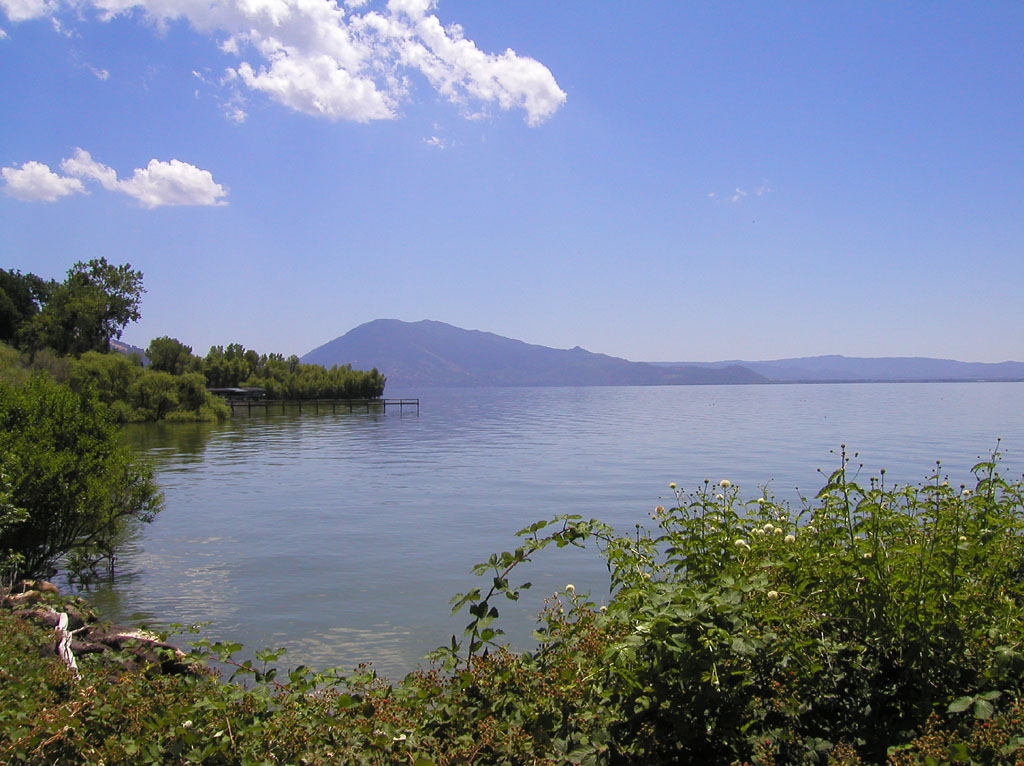
KELSEYVILLE, Lake County — People living near or visiting Clear Lake should check water-quality warnings before swimming, boating with pets or allowing children to play at the shore, particularly during conditions favorable to harmful cyanobacteria blooms.
Lake County’s official cyanobacteria resource page explains that blue-green algae are actually bacteria that can multiply rapidly when conditions favor blooms. Some cyanobacteria produce toxins that can cause illness in people and animals.
Why the lake can look normal and still pose questions
Water color alone does not reliably establish whether a sample contains toxins. According to the county’s health guidance, children and pets require particular caution because they may accidentally swallow water. Dogs can be especially vulnerable after swimming or drinking from the lake.
A bloom can also be localized: conditions at one Clear Lake beach or cove may differ from another section. A monitor’s reading from a different shore should not be presented as proof of current water quality at a Kelseyville access point.
Where to look for real measurements
Lake County says the Big Valley Band of Pomo Indians and Elem Indian Colony provide important monitoring, including regular sampling at multiple Clear Lake locations during warmer months. The county directs the public to the Big Valley tribal cyanotoxin monitoring resources and the statewide California Harmful Algal Blooms Reports Map.
The county’s Clear Lake Water Quality portal also publishes open-access information about surface water monitoring. The public can ask the county’s Water Resources division for help interpreting data.
What to do when you see suspicious water
- Avoid drinking untreated lake water and do not let pets drink it.
- Avoid visible scum, streaks or discolored patches; leave the water if a health warning is posted.
- Check the statewide HAB map and the county’s resources, keeping in mind that public maps may not reflect minute-by-minute conditions.
- Take reports of potential exposure seriously and contact a healthcare or veterinary professional if symptoms develop.
- Report a suspected bloom to the appropriate county or state monitoring program.
Lake County emphasizes that data are collected to guide management decisions and track change over time. This report does not claim that a specific Kelseyville beach is currently closed or that a new outbreak has been confirmed today.
Sources: Lake County Water Resources Cyanobacteria and Clear Lake Water Quality pages; California Water Boards Harmful Algal Blooms Reports Map.
Help this community newspaper grow
Your support helps build coverage for the people and places this local newspaper serves.
Donate once by card ↗Support Kelseyville News
Choose how to support Kelseyville News:
Credit / Debit Card via StripeChoose an amount from $1. One-time support through the publisher's LINKERNO Stripe account.
Continue with PayPal Continue with ZelleZelle payments go to Vitaly Ataev Troshin. Please verify the recipient in your bank before sending. Availability depends on your bank.
Optional reader support. When possible, add “Kelseyville News” to the payment note. Contributions are not advertised as tax-deductible. Support does not influence editorial decisions.More from Kelseyville News
Explore more local reporting and community updates on the newspaper homepage.
Visit Kelseyville News →
COMMUNITY
Comments
Join the California58 conversation. You must be signed in to comment.
Create a free California58 account or sign in with an available social provider.